Source Jiu Jitsu Mats for Training Competition and MMA
Find 17 jiu jitsu mats from verified suppliers in China. Compare PVC, PU, and XPE options with customizable sizes, thicknesses, and certifications for training, competition, and MMA applications.
Key considerations
Products List


Comprehensive Sourcing Guide
Strategic Sourcing Guide for Jiu Jitsu Mats
Procuring high-performance jiu jitsu mats requires a nuanced understanding of material science, safety standards, and supply chain logistics. For buyers in the B2B sector, the decision matrix extends beyond simple aesthetics to include density, surface texture, and long-term durability. The market offers a diverse array of options ranging from PVC and PU constructions to XPE foam variants, each serving specific training environments. This guide synthesizes observed product attributes and industry standards to provide a disciplined framework for evaluating potential suppliers and selecting the right equipment for training facilities, competition venues, or home gyms.
Material Composition and Structural Integrity
The foundation of any reliable jiu jitsu mat lies in its material composition. The supplied data indicates a significant divergence in material types available in the current market, primarily PVC, PU, and XPE. Each material offers distinct advantages regarding shock absorption, surface friction, and environmental resistance. PVC mats are frequently cited for their durability and are often associated with a service life of 5 to 8 years. These mats typically feature a density range of 190kg/Cbm to 270kg/Cbm, a critical metric for determining impact resistance. Higher density variants, such as those at 270kg/Cbm, generally provide superior stability for high-impact throws and takedowns, preventing the mat from shifting during dynamic movement.
In contrast, PU (Polyurethane) options are also prevalent, often paired with a slightly shorter service life of 1 to 4 years. While PU can offer excellent cushioning, the variance in expected lifespan suggests buyers must weigh the initial cost against long-term replacement frequency. XPE (Cross-linked Polyethylene) represents another category, often favored for its eco-friendly properties and ease of cleaning. The choice of material directly influences the "Protection Part" of the equipment. For instance, specific product lines highlight "Leg" protection, while others emphasize "Chest" protection, indicating that mat thickness and density must be matched to the specific injury risks associated with the training style.
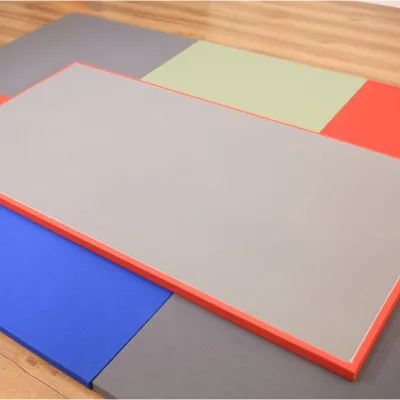
Surface texture is another critical material attribute. The data lists "Smooth" and "Tatami Surface" patterns as standard options. A Tatami surface provides the necessary friction for gripping during grappling exchanges, whereas a smooth surface may be preferred for specific drilling exercises or competition scenarios where sliding is controlled. Buyers should verify that the chosen material is waterproof and eco-friendly, as these are listed as standard features for high-quality units. The ability to customize the pattern allows facilities to align with their branding or specific training methodologies.
Technical Specifications and Dimensional Standards
When evaluating jiu jitsu mats, precise technical specifications are non-negotiable. The observed product data reveals a wide range of thickness options, specifically 3.0cm, 4.0cm, 5.0cm, and 6.0cm. Thickness is a primary determinant of safety; thicker mats generally offer better shock absorption but may introduce stability issues if the density is insufficient. For instance, a 6.0cm mat with a density of 190kg/Cbm might feel softer than a 4.0cm mat with a density of 270kg/Cbm. Buyers must cross-reference thickness with density to ensure the mat provides adequate protection without compromising structural integrity.
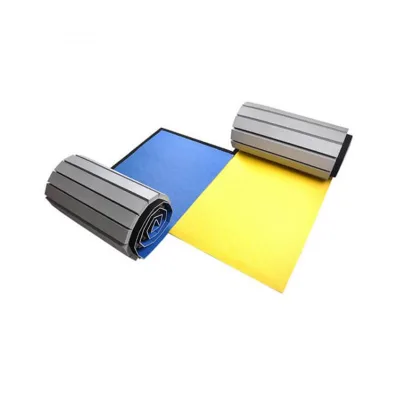
Standard dimensions vary significantly across suppliers. Common configurations include 100cm x 100cm, 100cm x 200cm, and 1000mm x 1000mm or 1000mm x 2000mm. Some product lines offer roll-out formats with a standard width of 1.5m and customizable lengths ranging from 1 to 20 meters. This flexibility is essential for large training halls where seamless coverage is required. The "prod_standard" field often lists these dimensions, but buyers must confirm if these are fixed or customizable. Customization is explicitly noted as available for many models, allowing facilities to tailor the footprint to their specific floor plans.
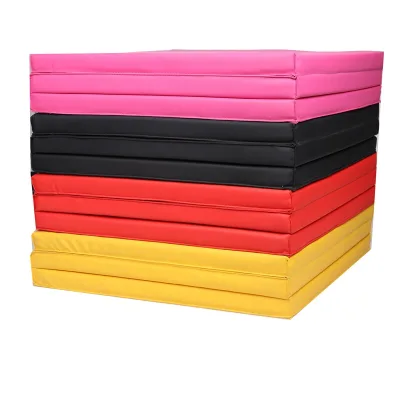
Color options are another specification that impacts both safety and aesthetics. The market offers a palette including Green, Red, Yellow, Blue, Grey, Black, and White, with many suppliers offering fully customizable color schemes. This is particularly relevant for competition venues where color coding may denote different zones or for gyms seeking to match their corporate identity. The "Style" is consistently listed as Unisex, ensuring the equipment is suitable for all demographics, from youth programs to adult elite training.
Compliance, Certification, and Safety Verification
Safety compliance is the most critical filter in the procurement process. The supplied data highlights specific certifications, notably CE and EN71. These are mandatory for products entering the European market and serve as a baseline for general safety. EN71, in particular, relates to the safety of toys and recreational equipment, covering aspects like mechanical strength, flammability, and chemical composition. The presence of these certifications suggests the manufacturer adheres to rigorous testing protocols, but buyers must verify the validity of these certificates for the specific batch of goods being purchased.
Beyond the listed certifications, buyers should investigate the flammability ratings and chemical off-gassing levels of the materials. PVC and PU mats, while durable, can emit volatile organic compounds (VOCs) if not properly cured. The "Eco-Friendly" attribute listed for several products suggests a lower environmental impact, but this claim should be substantiated by third-party testing data. For competition-grade mats, the surface friction coefficient is also a regulatory concern to ensure athletes can perform techniques safely without excessive slipping or sticking.
The "Service Life" attribute provides a proxy for durability but does not replace a formal warranty or performance guarantee. A mat with a 5-8 year service life implies a robust construction, but the actual lifespan depends heavily on usage intensity. Facilities hosting high-frequency training sessions should prioritize mats with higher density and reinforced edges. Additionally, the "Protection Part" specification (Leg vs. Chest) indicates that the mat design may be optimized for specific impact zones. Buyers should ensure the mat's construction aligns with the specific safety requirements of their training discipline, whether it is Judo, MMA, or Brazilian Jiu-Jitsu.
Cost Drivers and Procurement Economics
Understanding the cost structure of jiu jitsu mats is essential for budgeting and negotiation. The observed price range in the market spans from $2.6 to $2,000 USD, a vast disparity that reflects differences in material quality, dimensions, and customization levels. The lower end of the spectrum likely corresponds to smaller, thinner, or less dense mats, while the upper end encompasses large, custom-configured, high-density systems. The Minimum Order Quantity (MOQ) also plays a significant role in the total cost of ownership. Observed MOQs range from 5 to 200 units, with some specific models requiring 80 pieces.
Buyers must calculate the cost per square meter rather than the unit price to make accurate comparisons. A mat with a lower unit price but a smaller surface area or lower density may end up costing more per square meter of coverage than a higher-priced, larger unit. The "Packages" attribute indicates that mats are often shipped via pallets or cardboard boxes, which affects shipping costs. Bulk orders shipped on pallets may offer better freight efficiency, reducing the per-unit logistics cost.
Customization is a major cost driver. While "Customized" options are available for color, size, and pattern, these typically incur additional tooling or setup fees. The "Lead Time" for standard orders is observed to be around 7 days, but custom orders may require longer production windows. Buyers should factor in these lead times when planning facility openings or tournament preparations. The "Samples" availability, often listed as free, is a valuable tool for validating quality before committing to a large order, though shipping costs for samples may apply.
Supplier Evaluation and Quality Control Protocols
Evaluating suppliers requires a focus on their manufacturing capabilities and quality assurance processes. The data indicates that products originate from Hebei, China, a region known for its manufacturing density. While "Made in China" is a broad designation, specific locations like Hebei suggest a concentration of industrial expertise. Buyers should verify the supplier's capacity to handle custom orders and their track record for meeting lead times. The "Brand" attribute, such as "Finest," suggests that some manufacturers operate under their own labels, while others may be OEM providers.
Quality control should be a collaborative effort between the buyer and the supplier. Key inspection points include checking the density consistency across the mat surface, verifying the adhesion of the surface pattern, and ensuring the edges are properly sealed to prevent delamination. The "prod_packing" methods, ranging from cardboard boxes to woven bags and wooden pallets, must be robust enough to prevent damage during transit. Wooden pallets are often preferred for heavy, high-density mats to ensure stability during shipping.
Buyers should request detailed product specifications and test reports before placing an order. The "prod_model" numbers, such as WOL-JDM, Fst1230, or XLY-066, serve as unique identifiers for specific product lines. Cross-referencing these models with the supplier's catalog can help verify that the product matches the intended specifications. It is also advisable to ask for references from other facilities that have purchased the same model, particularly for high-volume orders. The "Usage" attribute, listed as "for Training" or "for Competition," indicates the intended application, and suppliers should be able to provide data supporting the mat's performance in these specific contexts.
Long-Term Procurement and Operational Considerations
The long-term success of a jiu jitsu facility depends on the maintenance and lifecycle management of its mats. The "Service Life" estimates of 1 to 8 years provide a baseline for replacement planning, but actual performance will vary based on usage intensity and maintenance protocols. Mats with "Waterproof" and "Eco-Friendly" features are easier to clean and maintain, reducing the risk of bacterial growth and odor accumulation. Regular cleaning with appropriate agents is essential to preserve the surface texture and prevent degradation of the material.
For facilities planning to expand or reconfigure their training spaces, the modularity of the mats is a key consideration. Roll-out mats with customizable lengths offer flexibility, while interlocking tiles provide a more permanent solution. The "Standard" dimensions of 1m x 1m or 1m x 2m allow for easy replacement of individual sections if damage occurs, minimizing downtime. Buyers should also consider the "Age Group" suitability; while many mats are listed for "Adults," some models specify an "Age Range" of "All Ages," making them suitable for mixed-use facilities.
Finally, the procurement strategy should account for the evolving nature of martial arts training. As techniques evolve, so do the requirements for equipment. A supplier that offers ongoing customization and support is more valuable than one that provides a static product line. The ability to source replacement parts or additional units in the future ensures that the facility can maintain consistency in training conditions. By focusing on high-density materials, verified certifications, and flexible supply chains, buyers can secure jiu jitsu mats that meet the rigorous demands of modern training environments.
Comparative Analysis of Product Attributes
To facilitate decision-making, the following table summarizes the key attributes observed in the market data, highlighting the variations in material, dimensions, and performance characteristics.
| Attribute Category | Observed Options | Key Considerations for Buyers |
|---|---|---|
| Material Type | PVC, PU, XPE | PVC offers 5-8 year life; PU offers 1-4 years; XPE is eco-friendly. |
| Thickness | 3.0cm, 4.0cm, 5.0cm, 6.0cm | Thicker mats absorb more impact; verify density to prevent instability. |
| Density | 190, 230, 270 kg/Cbm | Higher density (270) is better for competition; lower (190) for casual training. |
| Dimensions | 100x100cm, 100x200cm, 1.5m Width (Roll) | Match dimensions to floor space; roll-outs offer length flexibility. |
| Surface Pattern | Smooth, Tatami Surface | Tatami provides grip; Smooth is easier to clean. |
| Certifications | CE, EN71 | Verify validity for target market; essential for safety compliance. |
| Protection Focus | Leg, Chest | Select based on specific injury risks of the training discipline. |
| Color Options | Green, Red, Yellow, Blue, Grey, Black, White | Customizable colors available for branding or zone identification. |
| MOQ Range | 5 to 200 units | Some models require 80 pcs; negotiate based on volume. |
| Lead Time | 7 Days (Standard) | Custom orders may take longer; plan accordingly for facility openings. |
This comparative view underscores the importance of aligning specific product attributes with the unique needs of the facility. By systematically evaluating these factors, buyers can navigate the complex landscape of jiu jitsu mat procurement with confidence, ensuring the acquisition of equipment that prioritizes safety, durability, and performance.
FAQs
What materials are available for jiu jitsu mats?
The available materials include PVC, PU, and XPE foam variants. PVC options typically offer a service life of 5 to 8 years with high density, while PU mats may last 1 to 4 years. XPE is often selected for its eco-friendly properties and ease of cleaning.
Which certifications do these mats meet?
Products listed in the market carry CE and EN71 certifications. These standards verify safety for recreational equipment and ensure compliance with European regulations regarding mechanical strength and chemical composition for the mats.
How thick can the jiu jitsu mats be?
Thickness options range from 3.0cm to 6.0cm depending on the specific model. Buyers should match thickness with density, as higher density variants provide better stability for high-impact throws and takedowns during training sessions.
Can I customize the size and color of mats?
Yes, customization is available for size, color, and surface pattern. Standard sizes include 100cm by 100cm or 100cm by 200cm, but custom dimensions and colors like green, red, or blue can be requested for specific facility needs.
What is the typical lead time for orders?
The standard lead time for orders is approximately 7 days. However, custom orders requiring specific dimensions or branding may require longer production windows, so buyers should confirm timelines before placing bulk requests.
Which suppliers offer free samples for testing?
Some manufacturers provide free samples to validate quality before large orders. While the sample itself may be free, shipping costs for these samples often apply, and they are a valuable tool for checking density and surface texture.
How does density affect mat performance?
Density ranges from 190kg/Cbm to 270kg/Cbm and determines impact resistance. Higher density mats like those at 270kg/Cbm offer superior stability for dynamic movement, preventing the mat from shifting during intense grappling exchanges.